

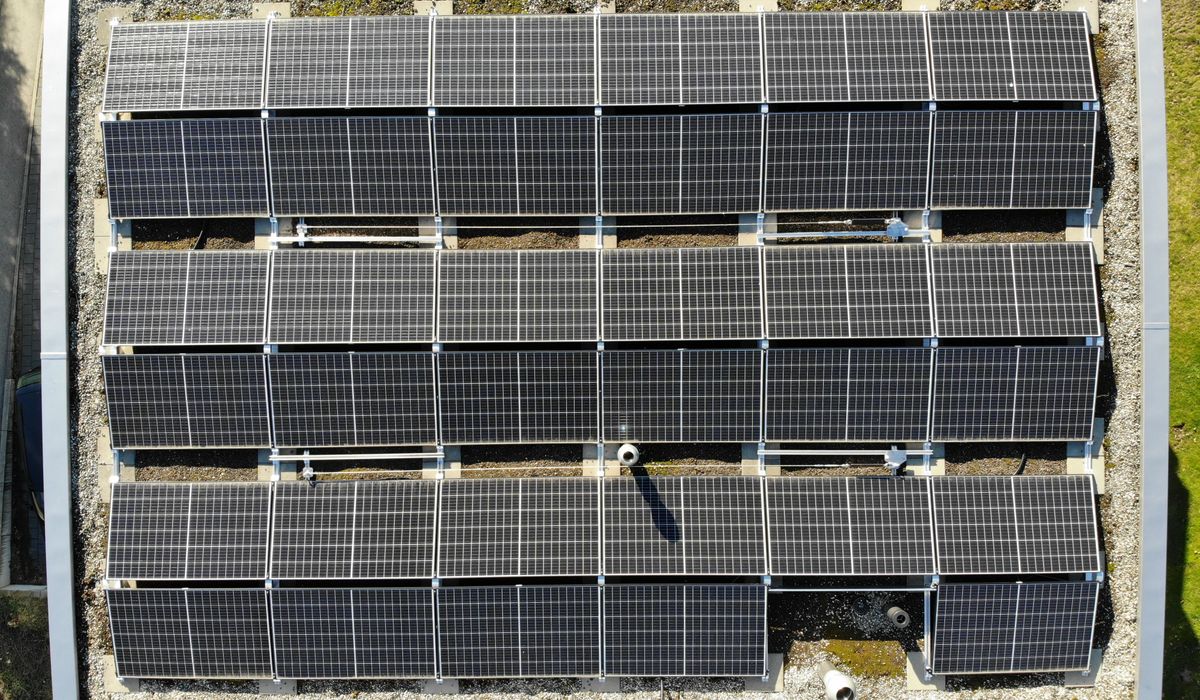
Sizing a solar panel system is less about squeezing every last panel onto your roof and more about matching generation to the way your household actually uses electricity. Get that match right and you will cover a healthy share of your annual bill. Get it wrong and you will export cheap power you could have used yourself, or spend more than you need on capacity that rarely earns its keep.
Start with your annual electricity use
Before you think about panels, find your real consumption figure. Dig out twelve months of electricity bills, or log into your energy account and look for the annual usage summary in kilowatt hours (kWh). If you have a smart meter, your in-home display or supplier app will often show daily, weekly and yearly totals.
For context, a typical UK household without electric heating uses somewhere between 2,500 and 3,500 kWh a year. Add an electric vehicle, a heat pump or a hot tub and you can easily double that. This matters because a system sized for a modest gas-heated home will be badly undersized for one with an EV and an air source heat pump.
Also note when you use power. Solar generates in daylight, peaking around midday. If most of your usage happens in the evening, storage or a time-of-use tariff will change your sizing decision.
Work out what your roof can hold
Next, measure your usable roof space. A standard modern panel is roughly 1.7 metres by 1.1 metres, so allow around 2 square metres per panel including the gaps installers leave between rows and at edges. A ten-panel array therefore needs about 20 square metres of clear roof.
Three things limit what you can fit:
- Orientation. A south-facing roof is ideal in the UK. East or west facing roofs still work well but typically generate 15 to 20 per cent less over the year. North-facing roofs are rarely worth the investment.
- Pitch. Anything between 30 and 40 degrees is close to optimal. Shallow or steep roofs lose a little output but are rarely a dealbreaker.
- Shading. Chimneys, dormers, trees and neighbouring buildings all cast shadows that drag down the whole array unless you use optimisers or micro-inverters on affected panels.
Check whether your roof is slate, tile or flat, and whether it is structurally sound. If the roof covering will need replacing within a decade, do that first — removing and refitting panels later is expensive.
Translate that into a system size
System size is measured in kilowatts peak (kWp), which is the output under standard test conditions. As a rough UK guide, each installed kWp generates around 850 to 950 kWh a year in southern England, dropping to roughly 750 to 800 kWh in northern Scotland. A well-oriented 4 kWp system in the Midlands might produce around 3,600 kWh annually.
Divide your annual usage by that per-kWp figure to get a starting point. A household using 3,600 kWh a year points towards roughly 4 kWp. But do not stop there — think about what share you can genuinely self-consume, because exported electricity earns far less than the retail price you avoid paying.
Most homes without a battery self-consume somewhere between 30 and 50 per cent of what they generate. With a battery, that can climb to 60 or 70 per cent. If you work from home, run appliances in the daytime or charge an EV during the day, your self-consumption will be higher and a slightly larger array makes sense.
Decide whether a battery changes the maths
A battery lets you store midday surplus for the evening, which is when most households use the bulk of their power. Sizing a battery is a separate exercise: a typical 4 kWp array paired with a 5 to 10 kWh battery suits most homes.
If a battery is out of budget right now, consider two options. First, size the array for your daytime load and accept modest export payments through the Smart Export Guarantee. Second, install a battery-ready inverter so you can add storage later without replacing hardware.
Check the practical and regulatory limits
Two constraints catch people out. Domestic installations above 3.68 kWp per phase need prior approval from your distribution network operator, which is normally straightforward but adds lead time. And many older properties have a single-phase supply with limited capacity, so your installer will confirm what the connection can carry.
You will also need an MCS-certified installation if you want to claim Smart Export Guarantee payments, and building regulations may apply if the panels add significant load or the property is listed.
Sizing checklist before you request quotes
- Twelve months of electricity usage in kWh, ideally split by season.
- A rough idea of daytime versus evening consumption.
- Usable roof area, orientation, pitch and any shading.
- Age and condition of the roof covering.
- Plans for an EV, heat pump or home extension in the next five years.
- A target: maximum bill reduction, maximum export income, or a balance of both.
Armed with those numbers, you can talk to installers with confidence. Ask each one to explain why they have proposed a particular array size, how much of your generation they expect you to use yourself, and what the payback looks like under your actual usage pattern. A good installer will welcome the questions. A vague answer is your cue to get another quote.





John Doe
14 January, 2022Having no content in post should have adverse..
Chauffina Carr
10 April, 2022We use these tests all time! Killer stuff!
Jim Séchen
16 July, 2022Thanks for all the comments, everyone!