


Why the clock now matters as much as the kilowatt-hour
For most of the last century, a unit of electricity cost roughly the same whether you boiled the kettle at seven in the morning or ran the washing machine at midnight. That assumption has quietly fallen apart. As more wind and solar generation comes onto the grid, wholesale prices swing wildly through the day — sometimes dipping to near zero, and occasionally going negative when it is particularly blowy and demand is low.
Time-of-use tariffs pass some of that signal through to households. The pitch is simple: use power when it is cheap and abundant, and you are rewarded. Charge an electric car overnight, run the dishwasher on a timer, and a well-chosen tariff can knock a meaningful chunk off your annual bill. But the headline rate is only part of the story, and the small print is where people get caught out.
How time-of-use tariffs actually work
Most smart tariffs split the day into bands. There is usually a very cheap window — often somewhere between 00:30 and 05:30 — a mid-rate shoulder period, and a peak band that typically covers late afternoon and early evening, roughly 16:00 to 19:00. Some tariffs change shape daily in response to wholesale prices; others keep fixed windows and simply publish the rates in advance.
To use any of them you need a smart meter that reports half-hourly usage, and your supplier needs to be able to read it remotely. Without that, the tariff cannot function. If you are still on an older meter, ask about an upgrade before you start comparing deals.
- Fixed-window tariffs are predictable and easy to plan around.
- Dynamic tariffs track wholesale prices and can be exceptionally cheap — or expensive — on any given day.
- EV-specific tariffs bundle a long overnight window with a lower rate, sometimes requiring the charger to be smart-enabled.
The small print: standing charges and peak rates
Here is the trap. A tariff with a dazzling overnight rate of 7p per kWh often carries a steeper peak rate than a standard variable deal — sometimes 35p or more — plus a higher daily standing charge. If your household uses a lot of electricity between four and seven in the evening, you can easily end up paying more than you did before.
Work out your honest split. Look at your last few months of bills or your in-home display and estimate what proportion of your usage sits in each band. A rough rule of thumb for a home with an EV is that 50–70% of consumption can be pushed into the cheap window once charging is scheduled properly. Homes without an EV or a battery usually find it harder to hit that, because heating, cooking and lighting naturally cluster in the peak.
Also check the standing charge, which varies by region and can differ by £30–£60 a year between tariffs. Over a twelve-month fix, that difference can wipe out the savings from a cheaper overnight rate.
Charging an electric car overnight without the hassle
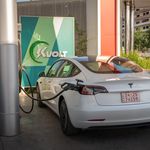
The good news is that scheduling has become genuinely easy. A seven-kilowatt home charger adds roughly 25–30 miles of range per hour, so a four-hour overnight window delivers well over 100 miles — comfortably more than the average UK daily drive of around 20 to 30 miles.
You have three ways to make it happen:
- Use the car's own timer. Most EVs let you set a departure time or a charging window in the infotainment menu.
- Use a smart charger. Many units integrate with tariff signals and will automatically soak up the cheapest half-hours, even on dynamic pricing.
- Use the supplier's app. Some tariffs control the charger directly and can pause it automatically during expensive spikes.
Set a departure time rather than a start time where you can — the car will work backwards and finish just before you leave, which keeps the battery warm in winter and slightly improves range.
Pairing a smart tariff with solar and storage
If you already have solar panels, a time-of-use tariff and a battery are a strong combination. Rather than exporting surplus midday generation for a few pence, you store it and use it during the evening peak, when the same unit would otherwise cost you three or four times as much. An empty battery can also be topped up cheaply overnight on the low rate and discharged during the peak — a practice known as arbitrage.
Set the battery to reserve a decent margin for the evening rather than draining it by lunchtime. Aim to leave around 30–40% in reserve on a sunny forecast day, and let the cheap overnight rate refill whatever the panels did not cover.
Getting the numbers right before you switch
Before signing up, gather three things: your annual usage in kWh, your rough peak-versus-off-peak split, and the standing charge on offer. Then run the maths against your current deal on a like-for-like basis. If you are within a few pounds, the flexibility of a simpler tariff may be worth more than the saving. If the gap is £150 or more, the switch usually justifies itself.
Finally, check whether the tariff has an exit fee, how long any fixed rate lasts, and whether smart charging is compulsory. A tariff that suits a two-car household with a battery and a heat pump may be entirely wrong for a flat with a single small EV. Match the tariff to how you actually live — then let the timer do the work while you sleep.





John Doe
14 January, 2022Having no content in post should have adverse..
Chauffina Carr
10 April, 2022We use these tests all time! Killer stuff!
Jim Séchen
16 July, 2022Thanks for all the comments, everyone!